
By clicking Get My Free Quote, I give Tina Gregory Agency (Tina Gregory Insurance Agency LLC) and its licensed agents, and, for quotes from insurance companies other than Farmers, Kraft Lake Insurance Agency, my prior express written consent, by electronic signature, to contact me with calls and text messages — including marketing calls and texts made using automated technology or an artificial or prerecorded voice — and by email, at the number and email I provided, about my insurance quote and related insurance products and services, even if my number is on a Do Not Call list. My information is never sold or shared with other agencies for their own marketing. Consent is not a condition of purchase; I can call (573) 358-4513 instead. Message frequency varies. Message and data rates may apply. Reply STOP to opt out, HELP for help. I agree to the Privacy Policy and Terms of Use, including the arbitration clause and E-SIGN consent.
Maybe you just went under contract on a house in Union and the lender wants proof of insurance before closing. Maybe your renewal came in higher and nobody told you why. Or maybe a spring hailstorm just rolled through and you realized you don’t know what your deductible is.
Most Missouri homeowners don’t read their policy until they need it. This guide is the version you read first: how a standard policy is built, how much dwelling coverage you need, how roof and storm claims get paid, what’s left out, what drives the price and how to compare quotes so the cheapest one isn’t just the thinnest one.
What does a Missouri homeowners policy actually cover?
The short answer: A standard homeowners policy, usually written on a form called the HO-3, bundles six coverages: the house, other structures, your belongings, extra living costs after a covered loss, personal liability and medical payments to guests.
Missouri law doesn’t require homeowners insurance the way it requires auto coverage, but a mortgage lender will, and it will want to be named on the policy. The Missouri Department of Commerce and Insurance (DCI) Consumer Guide to Homeowners Insurance, updated March 2025, walks through the parts. Letters vary a little by company, but the building blocks are the same:
| Coverage | What it pays for | What to check |
|---|---|---|
| Dwelling (A) | The house: walls, roof, foundation, built-in fixtures, an attached garage. | Set it to rebuild cost. Other limits often key off it. |
| Other structures (B) | Detached garages, fences, sheds, pole barns, workshops. | Often a share of the dwelling limit. A big barn can outgrow it. |
| Personal property (C) | Your belongings, including, DCI notes, items damaged or stolen away from home. | Replacement cost or ACV? Jewelry and firearms often have sub-limits. |
| Loss of use (D) | Extra living costs, such as a hotel, while a covered loss makes the home unlivable. | After a big storm, rentals fill fast. Check the limit. |
| Personal liability (E) | Injuries or damage to others you’re legally responsible for, plus your defense. | Match it to what you own. An umbrella can sit on top. |
| Medical payments (F) | A guest’s medical bills, up to a small limit, regardless of fault. | Small limit, small cost. |
An HO-3 typically covers the house against any cause of loss the policy doesn’t exclude, and your belongings against a list of named perils such as fire, windstorm, hail and theft. The exclusions are where the surprises live, so they get their own section.
How much dwelling coverage do you need: rebuild cost or market value?
The short answer: Enough to rebuild your home at today’s labor and material prices, a number that has nothing to do with what the house would sell for, what you paid or what you still owe.
Market value includes the land, the location and the housing market, and none of that burns down. The National Association of Insurance Commissioners (NAIC) says it plainly in a November 2024 consumer explainer: the cost to replace your home “is not the same as its market value.” DCI’s Lowering Your Premium page draws the same line between market value, “what your house might sell for,” and insured value, “the amount of insurance you’ve bought.”
Around Sullivan the two can drift far apart. An older farmhouse on acreage off MO-185 might sell for less than it would cost to rebuild, with plaster walls or a stone foundation nobody builds anymore. A newer home in town can be the opposite, with much of the price in the lot. A real rebuild number includes:
- Labor and materials at today’s prices, not the year you bought.
- Debris removal, because the damaged house comes down first.
- Building code upgrades, which can add up on an older home. Ask whether you have ordinance or law coverage.
- Storm-season prices. After a widespread hailstorm, contractors get scarce. Extended replacement cost coverage, where available, adds a cushion above your limit.
Replacement cost or actual cash value: how will a claim be paid?
The short answer: Replacement cost pays to repair or replace at today’s prices while actual cash value subtracts depreciation first, and on an older Missouri roof after a hailstorm that difference can be most of the check.
DCI’s guide defines actual cash value (ACV) as “the amount needed to repair or replace your belongings, minus depreciation,” and replacement cost as “the amount needed to replace an item at today’s price.” Replacement cost coverage may cost more.
The roof is where it matters most. In an April 2020 news release, Raising the Roof on Insurance Coverage, DCI explained that because a roof’s useful life is usually about 25 years, an ACV policy may pay as little as 20% of the cost to replace a 20-year-old roof. It also warned there may be other limits on what a policy pays for roof damage, and recommended checking your declarations page.
- With replacement cost roof coverage, the policy would have room to pay up to $11,000.
- With actual cash value, depreciation comes off first. If the roof’s depreciated value came to 20% of the estimate, about $3,200, that’s under the deductible, and the policy might pay nothing toward the roof.
Some policies also pay roofs on an age-based schedule or limit cosmetic hail damage. If yours mentions either, ask what it means in dollars before storm season.
How do wind and hail deductibles work in Missouri?
The short answer: Some insurers use a separate wind and hail deductible figured as a percentage of your home’s insured value, so a 2% deductible on a $250,000 dwelling limit means $5,000 out of pocket on a covered wind or hail claim.
DCI’s Lowering Your Premium page explains that some companies sell policies “with percentage deductibles for wind and hail damage, and a flat dollar amount for theft and other damage.” Its example: a house insured for $100,000 with a 2 percent deductible has $2,000 subtracted from any claim.
The percentage is figured on your dwelling limit, not on the damage. And as DCI points out, when your insured value goes up, so does your share of a loss.
| Dwelling limit | 1% deductible | 2% deductible |
|---|---|---|
| $100,000 (DCI’s example) | $1,000 | $2,000 |
| $200,000 | $2,000 | $4,000 |
| $300,000 | $3,000 | $6,000 |
| $400,000 | $4,000 | $8,000 |
DCI also notes that, in general, a higher deductible means a lower premium. That’s only a saving if you could pay it tomorrow, and spring storms make this the number to know before the season, not after.
By clicking Get My Free Quote, I give Tina Gregory Agency (Tina Gregory Insurance Agency LLC) and its licensed agents, and, for quotes from insurance companies other than Farmers, Kraft Lake Insurance Agency, my prior express written consent, by electronic signature, to contact me with calls and text messages — including marketing calls and texts made using automated technology or an artificial or prerecorded voice — and by email, at the number and email I provided, about my insurance quote and related insurance products and services, even if my number is on a Do Not Call list. My information is never sold or shared with other agencies for their own marketing. Consent is not a condition of purchase; I can call (573) 358-4513 instead. Message frequency varies. Message and data rates may apply. Reply STOP to opt out, HELP for help. I agree to the Privacy Policy and Terms of Use, including the arbitration clause and E-SIGN consent.
What doesn’t a standard Missouri home policy cover?
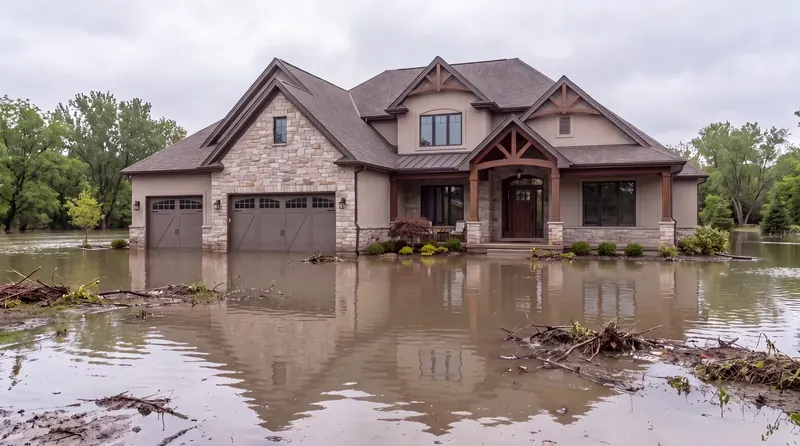
The short answer: Flood, earthquake, most sinkhole damage and water backing up through a drain are left out of a standard policy, but each gap can be filled with a separate policy or an endorsement.
| Risk | Standard policy? | Where coverage can come from |
|---|---|---|
| Flood | Excluded | A separate NFIP or private flood policy. |
| Earthquake | Excluded | An endorsement or a stand-alone policy. |
| Sinkholes, earth movement | Excluded on most | An endorsement where offered, or the FAIR Plan’s sinkhole policy. |
| Sewer and drain backup | Excluded unless added | Add-onA water backup endorsement. |
Flood. “Most homeowners and renters insurance does not cover flood damage,” FEMA says on FloodSmart.gov. NFIP policies cover up to $250,000 for the building and $100,000 for contents, and coverage generally starts 30 days after purchase, with exceptions such as buying with a mortgage. Around here it isn’t theoretical: the National Weather Service recorded record crests on the Bourbeuse at Union and the Meramec at Pacific in late December 2015. See our flood insurance page.
Earthquake. “Your homeowners policy does not cover damage from an earthquake,” DCI says, and deductibles of 10 to 20 percent are common. A U.S. Geological Survey fact sheet (FS-131-02, 2002) put the chance of a magnitude 6.0 or larger quake in the New Madrid Seismic Zone at 25 to 40 percent within 50 years. Sullivan isn’t in that zone itself, so it’s a real decision, and we’ll price it so you can make it.
Sinkholes. When DCI announced FAIR Plan sinkhole coverage in March 2015, it noted that most homeowners policies exclude sinkholes and few insurers offer them even as an add-on. The FAIR Plan’s standalone policy covers an abrupt collapse of the ground, not a slowly settling foundation. Ask what’s available for your address. For the full picture, read our storm, flood and sinkhole playbook.
What drives the price of homeowners insurance in Missouri?
The short answer: Mostly the house: its rebuild cost, roof and construction, claims history, fire protection, the deductibles you choose and, within limits set by Missouri law, a credit-based insurance score.
You won’t find a Missouri average premium here. Home insurance is priced address by address, and an average says little about your house. These are the factors that move it, from the NAIC and DCI:
Rebuild cost
The cost to replace your home and contents, labor and materials included.
Roof and construction
The age and upkeep of your roof and materials. DCI notes some companies limit coverage on older homes.
Claims history
Past claims can affect what you pay at renewal.
Fire protection
Distance to a fire hydrant and the quality of the local fire department both count.
Insurance score
Allowed in Missouri, with consumer protections in RSMo 375.918.
Deductibles and options
Higher deductibles lower the premium; replacement cost and endorsements add to it.
Missouri’s rules on credit. Under RSMo 375.918, an insurer that uses credit information must tell you at application. In plain English: it can’t deny, nonrenew or cut your coverage based on credit without also weighing a noncredit factor, and if credit hurts your underwriting, it has to tell you and explain your right to a free report and to dispute errors.
Lowering the price without gaps. DCI suggests asking about discounts for home and auto with one company, safety features like alarms and deadbolts, being 55 and retired, group memberships, being a longtime customer and wind- and hail-resistant shingles. You may qualify for some; eligibility varies. What we’d steer you away from is shaving the dwelling limit to hit a target price.
What if no company will insure your home in Missouri?
The short answer: Start with the regular market through an agent who can look at more than one company, and if no one will write the home, the Missouri FAIR Plan offers basic property coverage as a last resort.
A nonrenewal letter is stressful, and it isn’t always about you. An older roof, past claims or needed repairs can make a house harder to place. Call us the day the letter arrives. We start with Farmers, and when Farmers isn’t the best fit, we can also quote other companies through Kraft Lake Insurance Agency. Availability varies by home.
If the regular market won’t write it, the Missouri FAIR Plan (the Missouri Property Insurance Placement Facility) calls itself “a last resort to obtain basic property insurance.” Per its website, checked October 2026, its dwelling policy pays actual cash value on named perils such as fire, wind and hail; doesn’t include liability, earthquake, flood or sewer backup; has a $200,000 dwelling limit set by state statute; and takes applications through Missouri-licensed agents and brokers. Its toll-free number is 800-392-7240.
For questions or complaints about an insurer, the Missouri Department of Commerce and Insurance consumer hotline is 800-726-7390.
How do you compare Missouri home insurance quotes fairly?
The short answer: Line up the same dwelling limit, deductibles, roof terms and endorsements on every quote, because only then does the price comparison mean anything.
DCI recommends comparing homeowners prices every two years, and its guide includes a “Shop Around Worksheet.” Two quotes only compare when they cover the same house the same way:
- Start with your declarations page
It’s the baseline, so every change from it is on purpose.
- Use one dwelling limit
A lower price built on a lower limit isn’t a better deal.
- Match every deductible, in dollars
A 1% and a 2% wind and hail deductible are thousands apart.
- Check how the roof is paid
Replacement cost, actual cash value or an age schedule.
- Match contents, liability and endorsements
Water backup, ordinance or law, scheduled items and any earthquake or sinkhole coverage.
- Give complete details up front
Roof age, updates, past claims and outbuildings, so the price doesn’t change later.
- Your dwelling limit next to a fresh rebuild estimate.
- Your wind and hail deductible, in dollars.
- How your roof would be paid.
- Water backup, especially with a finished basement.
- Other structures, if you have a barn or shop.
- Your liability limits next to your auto limits.
- Whether flood, earthquake or sinkhole coverage fits your address.
Bundling home and autos. Many households own a home and more than one car. Putting them together may lower the price, and it lines up your liability limits so an umbrella can sit on top. Discounts vary and aren’t available in every situation, so we’ll show you bundled and separate. Our Missouri car insurance guide covers the auto side, and our Sullivan home insurance guide covers local questions. Start on our home insurance page or go straight to a free home quote.
The bottom line on Missouri homeowners insurance
A good Missouri home policy starts with a dwelling limit set to rebuild cost, a wind and hail deductible you’ve turned into dollars and a clear answer on how your roof would be paid. Then come the gaps: flood, earthquake, sinkholes and water backup. Price matters, but only once two quotes cover the same house the same way.
Call us at (573) 358-4513 or stop by 878 Dunsford Dr in Sullivan. Bring your declarations page and we’ll walk through it with you, then quote the coverage you actually want, or start with a free quote.
By clicking Get My Free Quote, I give Tina Gregory Agency (Tina Gregory Insurance Agency LLC) and its licensed agents, and, for quotes from insurance companies other than Farmers, Kraft Lake Insurance Agency, my prior express written consent, by electronic signature, to contact me with calls and text messages — including marketing calls and texts made using automated technology or an artificial or prerecorded voice — and by email, at the number and email I provided, about my insurance quote and related insurance products and services, even if my number is on a Do Not Call list. My information is never sold or shared with other agencies for their own marketing. Consent is not a condition of purchase; I can call (573) 358-4513 instead. Message frequency varies. Message and data rates may apply. Reply STOP to opt out, HELP for help. I agree to the Privacy Policy and Terms of Use, including the arbitration clause and E-SIGN consent.
Missouri homeowners insurance FAQ
Is homeowners insurance required in Missouri?
Missouri law doesn’t require homeowners insurance the way it requires auto coverage, but your mortgage lender almost certainly does, and it will want to be named on the policy. If coverage lapses, the lender can buy force-placed coverage and bill you for it, and that coverage usually protects the lender’s interest rather than yours. If you own your home free and clear, insuring it is your choice, but the house is usually your largest asset and the liability coverage protects your savings too.
How much dwelling coverage do I need on a Missouri home?
Enough to rebuild the house at today’s labor and material prices, including debris removal and any building code upgrades. That isn’t the same as market value, which includes the land and the local housing market, or what you still owe. The Missouri Department of Commerce and Insurance separates market value, what your house might sell for, from insured value, the amount of insurance you’ve bought. Recheck the limit every year, because construction costs move and a limit set years ago can fall short.
How does a percentage wind and hail deductible work in Missouri?
Some insurers use a separate deductible for wind and hail that’s a percentage of your home’s insured value instead of a flat dollar amount. The Missouri Department of Commerce and Insurance gives the example of a house insured for $100,000 with a 2 percent deductible: $2,000 is subtracted from any claim the company pays. On a $250,000 dwelling limit, the same 2 percent is $5,000. As your insured value goes up, the dollar amount of a percentage deductible goes up with it.
Does homeowners insurance cover flood, earthquake or sinkholes in Missouri?
Not on a standard policy. Flood needs a separate policy, usually through the National Flood Insurance Program, and FEMA says coverage generally starts 30 days after purchase. Earthquake must be bought as an endorsement or a stand-alone policy, and the Missouri Department of Commerce and Insurance says deductibles of 10 to 20 percent are common. Most policies also exclude sinkholes and other earth movement, though sinkhole coverage may be available by endorsement, and the Missouri FAIR Plan offers a standalone Sinkhole Loss policy.
What’s the difference between replacement cost and actual cash value?
Replacement cost pays to repair or replace damaged property at today’s prices, less your deductible. Actual cash value subtracts depreciation first, so older property pays out like older property. The difference matters most on roofs. In a 2020 news release, the Missouri Department of Commerce and Insurance noted that because a roof’s useful life is usually about 25 years, an actual cash value policy may pay as little as 20 percent of the cost to replace a 20-year-old roof. Check your declarations page for how your roof would be paid.
Can my insurer use my credit to price my home insurance in Missouri?
Yes, within limits. Missouri law, RSMo 375.918, lets insurers use credit information on property policies, but they must tell you at application that they may obtain it. An insurer can’t deny, nonrenew or reduce your coverage based on credit without also considering another, noncredit underwriting factor. If credit information hurts your underwriting, the insurer must notify you, name the credit reporting agency and explain your right to a free copy of your report and to dispute errors.
What is the Missouri FAIR Plan?
The Missouri FAIR Plan, formally the Missouri Property Insurance Placement Facility, provides basic property coverage for homes that can’t get insurance in the regular market. It describes itself as a last resort. Its dwelling policy pays actual cash value on named perils such as fire, wind and hail, doesn’t include liability, flood or earthquake coverage, and has a $200,000 dwelling limit. Applications are made through a Missouri-licensed agent or broker. Its toll-free number is 800-392-7240.
Last reviewed by Tina Gregory on .